Friday, February 22, 2008

It’s been a busy week—between classes I’ve been to see a couple of authors speak and read from their work.

The first event was the Lannan reading at Georgetown on Tuesday night. Poets Laura Moriarty and Elizabeth Robinson first participated in a seminar discussing poetics with the theme of “Serial: Open Forms” and then read from their work later the same evening. Seriality was a well-chosen topic—I felt it allowed a lot of scope to discuss the work both poets were doing. Elizabeth Robinson's most recent books are Under that Silky Roof and Apostrophe. Laura Moriarty's A Semblance: Selected and New Poems 1975-2007 is just out.

In discussing poetics, I was struck by the moment that Elizabeth Robinson reported that losing control over the medium of poetry had turned out to be one of the most useful things to happen to her in the development of her writing. I’ve been thinking that through—thinking how that moment of lost control is followed by a moment of reformulation. A new solution has to be found. Robinson talked about the series as an attractive form: she used a lot of terms borrowed from music, and I could see how the serial format becomes linked to a modern conception of the theme and variations format, where the metamorphosis is constant: the material revisited is not necessarily the original form of the theme, but each previous reincarnation/reinterpretation of the original material. As such, it really is an open form that creates and reinterprets points of return.

Laura Moriarty opened her discussion with a quote from Billie Holiday: “I do a lot of travelling with my voice” and then explored the theme of community. In thinking through community, one of her major points of reference was the poet Jack Spicer—who also worked in serial forms, and developed his own theories of seriality. Later at the reading, she read a work that specifically engaged with Spicer and his neighbourhood.

Moriarty was talking about a quite specific community of poets—larger those in the Bay Area around San Francisco. In 2003 when I was visiting San Francisco I got to view a little slice of this community in action.

In thinking through this idea of community, and how it relates to poetics, Moriarty talked about the new book she has just finished, A tonalist - which is also the name of a blog she writes.. Again, a term borrowed from music. (Are we all indebted to music?) She described this work as a long, discursive poem, in which she writes in conversation with the community she I part of—writing about and reviewing the work of others within her community over the course of the poem.

The open discussion following these introductions by the poets really focussed on community, and what it means to participate in a living poetic community. Engagement with other poets, production of chapbooks, running of readings—all of those things.

The reading that followed was in many ways exemplary of these poetics—although I wonder if poetics always in some way describe an unattainable ideal. There must be something to strive for in order for each new poem to have a point, and each poem surely falls a little short—and perhaps in those gaps creates the moments of interest (or, potentially, frustration). I find the Lannan series fascinating, as its something of an open discussion.

On Wednesday Nadeem Aslam, the author of Season of the Rainbirds and Maps for Lost Lovers, spoke as part of the Georgetown Writers series that David Gewanter has put together. He read from his new novel The Wasted Vigil, which will be published on 2 September by Knopf in the US, and Faber & Faber in the UK. This latest novel is set in Afghanistan: Aslam grew up in a family of journalists, and was born and lived for fourteen years in Pakistan. During this time, he said, it was impossible to remain unaware of Afghanistan, during the period of the Soviet invasion. When he was fourteen his family moved to England, where he has been based ever since.

The sections of the new novel he read were packed with sensory information—Gewanter described in Maps for Lost Lovers a “wild imaginative energy” going on amid the story of ethnic relations and immigrant relations in Britain. That same energy was apparent in The Wasted Vigil—I felt almost saturated in this rich language, which, amid the appeal to the sense, wound in history and politics. I’ve wanted to read Maps for Lost Lovers for some time, and this reading has spurred me on in my determination to do so.

Aslam described living with an awareness from a young age that he was always going to be a writer—at the same time, the move to the UK had an impact upon that. Having grown up speaking Urdu, he now learned English—and in school he did better in the sciences which relied less on having perfect English skills, which he was still developing. He ended up in University, reading sciences when one day he had realised that now his English was good enough to write—and that “if I wanted to write, I could drop out”—which he did.

Answering questions following his reading, Aslam described a fascination process whereby he writes the story and then consults the repository of notebooks he has kept over the last several years, to see if he can insert the material he has gathered in those notebooks—images, occurrences—into the story.

He describes himself as quite compulsive—he says he spends 15 hours a day working on his writing: not just the act of writing itself, but the reading and thinking and problem solving that goes on around writing. He reads Urdu everyday still—talking about how this feeds into his craft in English he said that he doesn’t just have the 26 letters of the English alphabet—but he has a larger alphabet available to him, a larger conception of language.

He has had the idea for The Wasted Vigil in mind for a long time—in fact, after he finished his first novel, he tossed a coin to decide if he would work on Maps for Lost Lovers or The Wasted Vigil next. I love that chance can still play a large part in the production of art.

Wednesday, February 20, 2008

I expect over the coming months new corners of the library will get to be quite familiar. I’m glad I’ve started to isolate the work I’m interested in for my final projects so early in the semester—I can chip away at those essays as I go from now, trying to figure out how I’m going to move around the texts I’m interested in. I was surprised when I went into the library that the Maria Edgeworth section was so small. It seems people are only starting to get interested in her now.

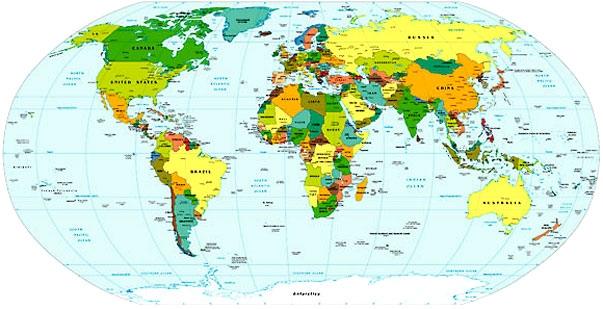
After spending this morning completing my list of world Independence Days, and their equivalent celebrations, I found that the initial information I’d found on Nepal’s national holiday was wrong, and this in fact took place yesterday, on 19 February. With any luck, now that I’ve got it sorted, delay in posting should be minimal from now on.

Speaking of the Independence Day Project, I’m looking hard for a poem by a poet from Brunei. It’s proving to be my most difficult search so far. (That said, initially I thought from searching on the internet that finding a good translation of a good Nepali poet was going to be difficult—and then I found a beautiful anthology.) I’m hoping that, as time goes on, some more people might get involved and send suggestions. Or am I in dreamland?

I sometimes am amazed that I’ve found time to keep juggling all these things—but at the moment all the balls are still staying up in the air. It makes me think of a juggler I used to know, Brian, who was studying at NICA. He was practising juggling seven balls when I met him. One falls, they all fall.

Not that I’m anticipating a crash! I have a lot of practice at this.

I have a few other interesting bits to catch up on here, but I think they might have to wait a few days—I’ve seen three very interesting writers speak this week.

I wanted, too, as a kind of reminder to myself to record the list I made at the start of this year as to the things I wanted to get done this year. I make these lists every year, and there are always a few that fall by the wayside, but a lot of things that I manage to fit in. This year’s list is as follows:

• Apply for PhD Programs
• Write 20 poems
• Give 4 conference papers
• Visit 10 or more states in the US
• Go rock climbing
• Blog at least once a week
• Visit all the Smithsonian museums
• Take dance lessons again
• Start taking photographs again
• Cook more

Obviously some of these are more prosaic than others (yes, on the day-to-day front, I’ve been cooking a lot. And glad of it too.) Overall, though, it seems like a list that is fairly rounded—it encompasses all the types of things I love. And I’m pleased to say, since the start of the year I’ve written about 5 poems—they’re not all finished (far from it) but they all have something happening in them. I’m looking forward to some time to work through them. Time? I’ll find it someday, somewhere.

I'm giving two conference papers in March (one, as already mentioned, at the University of Virginia, the second at the University of Rhode Island) and then I'll wait until next semester - I'll probably try to do one in then. I've been chipping away at most of these things...

Monday, February 18, 2008

I had a paper accepted for a conference at University of Virginia - UVA is a great university, so I feel like this is a great opportunity. The conference is on 13-14 March, so I'd better get cracking and write a new version of this paper soon - most likely that'll happen over Spring Break. The paper is, broadly, on intersections between "thing theory" and travel theory. (Yes, I think the first has a preposterous enough title to warrant the would-be air-quotes-on-the-page.) I wrote about Samuel Johnson's Journey to the Western Islands of Scotland at the end of last year - for this paper I'll be cutting that in half, and adding a little comparison to how Samuel Johnson's traveller compares to Bruce Chatwin's in The Songlines. Yes, I realise that sounds a little crazy, but I have ideas...

Speaking of Spring Break, I was having a Spring Break breakdown over the weekend - trying to decide where on earth to go. I was dreaming of New Mexico and El Paso, Texas, but it's just not going to happen. It's too extravagant - and there are two conferences I'm going to in March, so I'll need to save a little to get to both of these. Instead it looks like it will be West Virginia: Harper's Ferry, which is very pretty. I'm thinking however of hiring a car for a few days, and driving around West Virginia a little bit - I found a list of ghost towns in the state, and thought that could be interesting. Hopefully a plan will crystallise in the next few days...
I have been busy (as ever) lately—hopping from one thing to the next, and then studying in between. A few highlights:

Last week, Scott Heath, a member of the English department, spoke as part of the Georgetown Writers’ Series on performance poetry, slams and “the archive.” He also performed a number of poems. He explained a lot about the dynamics of slams in the US, and how there are distinct slam styles that vary from city to city. For instance: New York slam poetry has a different rhythm to Detroit slam. He’s been in DC for a few years, and is starting to catch on to the scene here.

I was interested to confirm that the saying that I’ve heard in Australia is definitely one that comes from the US slam scene—“He tried to win with poetry.” Page poetry of course isn’t likely to win the day: a slam is a performance. In showing us what it’s all about—and he did preface it with the disclaimer that he hadn’t slammed in a few years (though he previously participated in National teams)—Heath gave examples of the types of moves—almost a choreography, or perhaps something that reinvents the movements of Elizabethan oratorical handbooks—the slam poet makes, and a number of times he sang. Apparently singing (provided you can do it well) is always a crowd pleaser.

Slams here—the big ones at least—sound like they’re a lot stricter on the rules. Slams I’ve been to in Melbourne felt like glorified open mike events, and as the judging was always based on audience response, it was always the poems about sex or football that won. (What can I say? Even in a poetry crowd, we’re pretty predictable!) In the US, the rules are enforced: a strict 3 minutes time limit. There are five judges picked from whoever in the audience volunteers, and all the slam poets can vet the judges, to ensure there are no friends or enemies on the panel. Also, the poetry is a lot more sophisticated than poetry I’ve heard at slams in Australia. It really is text that’s designed for performance, and it tackles a range of issues. Like in hip-hop, there are some amazing rhythms built into the language. I’m hoping I’ll get to go to a high level slam event sometime while I’m here.

Heath also talked about some collaborative work he’s doing with a musician in recording his poetry. What fascinated me was that he referred to this as “the archive”—perhaps because he simply didn’t have a clear idea of who the eventual audience for this work was going to be. It reminded me of conversations I used to have at the conservatorium with the other composers. Adrian Watkins, who was then recording and performing under the moniker of White Sirens, said that for him the recording was the end point his musical endeavour. Performance was great, but ultimately, what he wanted was this immutable product, the CD. At that time I was working quite a bit with electro-acoustic music, but what interested me the most was the intersection between a pre-meditated electronic backdrop and a live performer: and the experience of that as a live event. I have recordings of the performances, but the problem with recordings is that they flatten space. If I go back to music, space will be the major thing I want to explore. I’m hoping to ask Scott about this notion of the archive—I may report back.

On Saturday morning, Helen Hughes (a fellow Australian in DC—my own kind!) and I went to see an exhibition at the Kennedy Center: Japan! Culture and Hyper-Culture. It was fascinating: we saw three installations, as well as a few pieces in the foyer to the center.

The first installation we saw was Reiko Sudo’s work of giant suspended textile fish. (I have to admit, when I first saw them their shape reminded me of cannons) and, in a little room behind these, there was a projection of a fish pond on the ground. Some people walked through the fish pond—after all, it was only coloured light—but I was struck how so many people, myself included, skirted the edge of the pond.

Next we saw Yayoi Kusama’s installations Day and Night: the first, Day, was a room painted yellow with black spots everywhere, and large, amorphous balloons suspended from the ceiling, and odd, blobby shapes emerging from the floor. The second, Night, was the reverse of this: black walls and yellow spots. It was interesting to see how much my mood changed between the two rooms. (I don’t think it was just the claustrophobia caused by the large number of people in the Night room.)

Between these two rooms was a work by Tadao Ando: Four Cubes to Contemplate Our Environment, consisting of glass cubes covered in words (Water, Rubbish, CO2, and Future?) filled with different things: empty plastic water bottles, aluminium cans crushed into blocks and stacked, a video projected on the ground and—emptiness. There was something wonderful in circling all these.

Saturday night saw me at Politics and Prose bookshop, where Anne Enright, author of last year’s Booker Prize winner The Gathering, was speaking. It took me a while to find my way to the shop, as I hadn’t ventured that far up Connecticut before, but I’m glad I braved it. Enright read from her book for about half and hour and then answered a lot of questions. I think she’s still recovering from her newfound fame: her publishers initially published a run of 8000 copies of The Gathering. Since she won the Booker (which of course prompted a reprinting) the book has sold over 230,000 copies.

It was a convivial event, and I have a copy of the book now, which I hope I will eventually get to read (oh… time) although not a lot stayed with me from the question time—one woman made the comment that when she read a book with such beautiful prose she always despaired of writing herself. Enright responded that writers don’t write these books, or not straight away. First they write 17 books, starting with a terrible one, and getting increasingly better. Something to hold onto. I got a feel for her humor (dark, Irish) and I look forward to reading her work. I have to admit that hearing prose read is usually a frustrating experience for me. I’m so used to the compactness of poetry, that when I hear prose I want to slash it and find the one page poem. Brutal.

Nonetheless, I love to sit down and read. I played hooky from my study on Friday night and spend the whole evening reading Curtis Sittenfeld’s second book—I had hoped to interview her on Tuesday, but it’s not happening. Despite the fact that the interview is not-to-be, I have to admit I enjoyed the book, although The Man of My Dreams has got to be the worst title on earth! There were a lot of things to like about the book—a lot of crispness, and a real feel for the way a character develops—but I did feel, in finishing, that it was a book that made a point.

Friday, February 15, 2008

I feel like I’m starting to find a balance in which I can get a little poetry written, and also read and think through the type of work I'm doing for classes. Best of all, I feel like I’m already starting to hone my paper topic for one of my final essays for the semester, even though it won’t be due until May or so.

I've been getting really interested in Maria Edgeworth, especially after reading Ennui, which I feel is a less clean novel that Belinda, but also a much more interesting one. I think one of the reasons for this much be that, with Maria Edgeworth’s own interest in her own Irish heritage, her Irish novels have something at stake. Ennui turns on a weird plot twist—one that shouldn’t work (two babies switched at birth) but does, because of the questions it raises about class and nationality, and how these identities are formed. At the moment I’m trying to tease out what position the only Scots character, Mr McLeod, plays in the text. From there I want to start looking at letters, at literacy and both the naming and renaming that occurs in the novel, but also the specifically French names and motifs that occur. So, I feel that Maria Edgeworth and I will be spending some time together over the coming months. Best of all (well, best of all to a nerd like me) is the fact that I think a lot of my research and thinking will tie nicely into the things I want to think through for my thesis, starting in September, on nineteenth century British representations of Australia, and their relationship to national identity.

Spring break is creeping up on me, and I’m starting to think I’m just not going to make it to Louisiana. (Sad—I just haven’t lined it up early enough. Perhaps it can still happen a little later in the year.) So, I’m thinking of finding somewhere a little closer, and setting off for a few days by myself.

I’ve been thinking through poems a lot—partly because I’ve been studying poems in my Modern & Contemporary Poetry & Poetics subject, and also more generally because I’m trying to make a little time for it each week. I’ve been asking David Gewanter to give me assignments—strictures—so I sit down and write something each week. Even if they begin as an exercise, of course I end up getting absorbed and spending some real time on it. Today I got a chance to sit down and look through some recent pieces of work, and I feel like he talked so concretely about the work each poem was doing. There was something so refreshing about it. It made me want to break apart my poems—break apart language—and get somewhere new. I feel that I’ve had an overwhelming schedule lately, so it was nice to sit down and think about this all in a concentrated way. Also, I feel that over Christmas I finished (for perhaps the eighth time) a manuscript, and now I feel like I’m casting about, trying to see what sticks in terms of new subjects. Some of the things I’ve been playing with for a long time—the Hansel and Gretel poems—could end up being pretty drastically re-formed. There’s something lovely in this.

I’ve managed to keep Sunday a complete blank for now. I’m still wondering if I can get myself out of town for the day—someplace not too far away, but distinctly non-DC. Fingers crossed.

Wednesday, February 13, 2008

Yesterday morning Condoleezza Rice spoke at Georgetown university on “Transformational Diplomacy.” In the spirit of getting as much out of this DC experience as I can, I decided I'd go to the speech: I don’t agree with a lot of her politics, but I can’t help admiring her for everything she has achieved. There is, too, still an excitement for me that Georgetown brings in people of this caliber—that I have the opportunity to attend these events for free.

That said, I’m not sure what I got out of the experience. Getting into the event in the first place was an ordeal: the doors opened at 8.45 for an event due to start at 10.45. Why? Not only in anticipation of the crowds (in fact, the hall was not entirely full) but to clear security. We weren’t allowed to bring in backpacks (this is a school, right?), computers or cameras, had to remove coats to go through the security checkpoint... I got to the hall at 9.15, and at 10 (the point at which they turned people away—you had to have cleared security 45 minutes in advance or you couldn't get in) had my seat. So, I sat reading William Carlos Williams's poems for three quarters of an hour.

There were some dissonances for me in the speech: for a start, Rice framed her speech as though she were only addressing Americans. While this might not seem unusual at an American university, she addressed her remarks several times to the School of Foreign Service, which attracts a large number of international students to Georgetown.

Of course there was politicking in there—that was always going to be the case. Talking about attempting resolutions to situations that required diplomatic interventions, Rice referred obliquely to the inevitability of “short-term tensions” (how short is short-term?); she referred to moves made by Bush’s administration as “historic”—without irony; at one point she referred to resources being used up by government in the 1990s (no, she didn’t mention Clinton by name—after all, he attended Georgetown). There was the kind of alliteration and snappy rhetoric that a good speechwriter can produce once he gets a good cup of coffee in him.

Nonetheless, a sentiment I really valued was one central to her vision of an effective diplomatic corps: her aim, she said, is “not just recruiting the best and brightest—but making them better and brighter.”

Sunday, February 10, 2008

Wisconsin Death Trip at the Gonda theatre on campus. Apparently over course of the performances the show has changed shape - what I saw was a different version to what people saw the week before. I guess, like an out of town opening, they were able to use these performances to gauge reactions.

My reaction was extremely positive. A friend from English found the narrative a little too fragmented, but that didn't bother me. It wasn't, just like the book wasn't, a single narrative, but a way of imagining the trials of a community. I felt there was a lot to like here. The music was great: I would probably put it in the category of music theatre rather than "folk opera," as Tim Raphael (the director and writer) billed it, but it wasn't in any way cheesy: I feel that it really imagined how something like the musical could be theatre art, rather than glitz. That said, while I understood the rationale for the musical eclecticism (while one might imagine that late nineteenth century Wisconsin would be a fairly homogenous group in terms of ethnicity, that wasn't true: the musical ragbag was meant to reflect this) I felt that there could have been a greater unity to the music: using the different styles, but blending them a little more, to mirror the way different people came to be part of one community.

For the most part the students acting were great: they were obviously very taken with the material, and wanted to serve it well. There were moments at the start where, as the ghosts of the community arose, a few of the actors were oddly stiff or overdramatic: they ruptured the surface, the texture on stage, so that you couldn't help being distracted by their awkward postures. I wonder if this was simply warming into it, or reflective of the fact that they are, after all, student actors.

It's exciting that after Tim Raphael had been thinking about how to do this for so long it got to appear for the first time at Georgetown. It's made me want to see more student theatre (although I've been warned some of it is terrible) - but then, I'm also more generally getting involved with seeing stuff around DC. I'm getting so busy - frazzled - with university work, that it's great to put that aside for a breather now and then and jump into something cultural.

Thursday, February 07, 2008

I've been feeling a little homesick today - though I'm not sure where I locate that homesickness. I'm both homesick for Australia, but also for poetry. The scraps I've been writing feel like a salvation - and while I'm writing them, I feel like I'm creating something strong. It's that rapture of concentration. But I'm finding often I have trouble gaining perspective on what I've written, because somehow being in a different country, my poetry has a different life. I wrote a poem in short sections recently - I don't like to say fragments, because really they were each fully formed (as best I can currently do, that is) - and when I was discussing it with some people today, they told me (after some discussion) that they were confused by the word "dam": in the US, it doesn't refer to the gigantic, muddy puddles that I remember from home. "Oh, ditches," they said. Yet, the poem can't change. Can I be read here?

I've been remedying homesickness by reading Nicolas Rothwell's book Another Country. Even though I'm reading about Central Australia - because it's a place I've never been, instead in my head I'm thinking about the landscapes between Cowra and Dubbo - the parts of the "country" that I do know. But, too, it's teaching me about the regions that I haven't felt emotionally able to come at before: somehow the centre was always too vast. But now my absence is, I guess, vaster. I get so busy that it takes time for me to remember I need space to think about home.

A friend - Kevin Rabalais - is launching his first book, the novel The Landscape of Desire in Melbourne at the end of this month. I wish I could be there (I'm hoping to get a copy fairly soon after the launch, and perhaps I can spend part of the Easter weekend reading it. For those of you who are in Melbourne, the launch is on 28 February at The Avenue bookstore in Albert Park. The book is being launched by Alex Miller. I've known Kevin for a few years now, and I'm so excited to see his book becoming a reality. He and his partner Jennifer Levasseur are, among my friends, two of those most dedicated to the craft of writing.

Wednesday, February 06, 2008

Last week Ammiel Alcalay, the current holder of the Lannan Chair in Poetics at Georgetown, gave a reading as part of the Lannan series - I attended this, as well as the seminar that proceeded it. It was a fascinating evening (albeit a bit hectic for me - as in between attending these, I had to run back to the library where I was holding office hours for my students) and one thing that emerged for me was the generosity of Alcalay.

To begin the seminar discussion, he read one of his poems from his book From the Warring Factions, a work that is dedicated to the memory of Srebrenica, and that is made up of collage - of the bringing together of fragments of found texts (from the Aeneid to speeches by Dick Cheney): this is prat of what he described as a long term project thinking through how to deal with documents. Having written a prior book that opened a space between the documentary and the created, but placing a narrator to create an intentional discrepancy, when he came to write From the Warring Factions he felt that the only way to write the book was if all the text were appropriated. The result is a polyphonic work that echoes not merely the conflict in Balkans, but that can be read in reference to other conflicts. The reading of this poem, and discussion of his method produced an interesting discussion in the seminar, and it left me wondering if in some ways the merit of Alcalay's working method lies in a certain instability in his text: that the polyphony could shift over time, and the amassed language be transferred, transformed for the reader.

Alcalay has done a lot of translating - he is probably best known as the translator of Semezdin Mehmedinović's Sarajevo Blues. During the seminar, he spoke about his involvement in translation (and the New York Translation Collective) and during the reading he read works by other writers he has translated, reading both poetry and prose.

He's also written essays, and I'm hoping to find some time to read some of these prose pieces in the coming weeks - while he's at Georgetown, I'm going to set up an interview with him too (check back... it may take some time, but it will happen) - but I want to spend some more time reading him, and the poets he has translated before I get to that stage.

It's got me thinking about lots of different things - as usual. Ways of experimenting with my own writing, subject matter, the importance of translation... The discovery of a new poet is a fascinating moment.

Sunday, February 03, 2008

It's been a New York weekend - or, as I billed it recently, it was my reunion with New York: I went up for the weekend, and stayed at the same hostel I stayed at in 2003. I came by bus on Friday morning - quite a cramped affair, with free wi-fi that worked some of the time. I got up to New York and it was raining (as it was in DC... I nearly fell down the steps of the local bus that took me to Dupont to catch the New York bus). I'm sure all this would have been fine, but I woke up Friday morning to find I had a cold - sore throat, exhaustion, aches... usual, miserable affair. I thanked god for the dissolvable aspirins that mum had mailed over last year. (They don't have dissolvable aspirin here. But I thought they have everything? I hear you ask. You heard it here first.) So for the last 48 hours I've been dosing myself, and sleeping as much as possible (on one of those super-skinny, squeaky hostel dorm beds...) and, during those moments in between, I caught up with Ivy Alvarez, wandered around the city, and crashed into the AWP conference.

I came up specifically for Ivy: it's been a few years since we have seen each other, and she's definitely gone on to bigger and better things with the publication of her first full-length book, Mortal. It's that book that brought her to New York, from Cardiff where she's been living for the past few years. Her publisher, Red Morning Press, participated in the AWP conference, and so Ivy came to town to support her publisher, promote her book and give a reading. I got the invitation to the reading a few months ago and determined that, since I hadn't previously made it to New York since I've been in DC (nor anywhere else, except Tennessee - and yes, that counts as somewhere) I would absolutely make it up to see the reading. Last time I was in New York, I saw Richard Howard and Maxine Kumin read as part of a series by the Dia Center for the Arts.

This was not that. This reading was East Village post-grunge at the 11th Street Bar. Yes, all the poets reading had published books - but not many of them should have them, based on the poems they read last night. Seriously - there are only so many sensitive, bearded, converse-wearing, thick-rimmed glasses spokesmen and their female counterparts (complete with batwing eyeliner) I can take. Ivy was great - she was succinct, well-presented and she chose work that both makes an impact in a single reading, and invites rereading. There were one or two other moments that I was pleased with, but somehow the whole evening had the feeling of an open-mike night. I may just have become a curmudgeonly old lady right then and there. Oh well. I suppose it was going to happen some time.

There was one author, Nickole Brown, who I've been thinking about a bit since the reading - I have a feeling her book Sister would be worth a proper look - and maybe sometime, in amidst the pile of other things I've got going on - I'll find some time to give her work some proper attention.

The AWP (Association of Writers and Writing Programs) conference was something else. I really didn't have much idea about it (this is where being an Australian writer, not an American one, gives me perhaps a little reason for my ignorance...) but it was huge. Publishers and writing programs had tables, and as I was rushing through during their last few hours, a lot of people had reduced book prices even further than the already-discounted AWP prices. There ended up being a few things I couldn't say no to (an anthology of Polish poems, Ilya Kaminsky's book Dancing in Odessa) and a few more things I ended up getting free, so I came back to DC with a small stash of things to keep me busy, when classes aren't already threatening to take over my life. I'm hoping that reviews and other bits and pieces - including a small interview with Ivy will be forthcoming soon. Stay tuned.

Speaking of classes, the flu wiped out a lot of my planned study for the weekend, so now that I'm home I have a lot of Sydney Owenson's The Wild Irish Girl to read. I've promised myself a treat if I can get through three quarters of it in four hours. On your marks. Get set. Etc.

Thursday, January 31, 2008

A few days ago I went to see Barbara Feinman Todd speak at Georgetown, as a guest of the Georgetown Writer's Series. Feinman Todd heads up the journalism school, and, in a previous life, was a ghost writer. As a ghost writer, she fell largely into writing for political figures - most "famously" (infamously?) for Hillary Clinton. The fame part came in from the fact that when she was hired for the project, it was announced that she would "help prepare the manuscript" of It Takes a Village - and yet, when the book was published, Clinton did not acknowledge either her or anyone else by name for their assistance in bringing the book into being. Something akin to an uproar ensued, and Feinman Todd humourously refers to the incident as "ThankYou-Gate" in her article "Ghost Writing." When I asked her where along the road to recovery - or how far into ghosting "rehab" - she is, she answered that she'd been dealing with it pretty well until recently. In January the New Yorker ran a long article on Hillary Clinton, that included a reference to her work on It Takes a Village. As a democrat, she said, it is difficult to find your cause taken up to serve conservative ideals.

She said she got into ghost writing thinking that it would help her develop her writing voice - that by getting into the skin of others, she would really be able to develop the characterisation that is so important to novel-writing, her first love. Apparently, what she has trouble with is plot - oh, that old thing! I'm guessing ghosting for someone else doesn't necessarily help with the mechanics of a story, so perhaps it was already playing to her strengths. Ghost writing? Not a path she'd recommend, however interesting her past makes her seem at cocktail parties. In fact, she said if anyone was considering it as a career option after her talk (the upside? money) she would take them out for a drink and talk them out of it. It seems like the problem is the entrapment in the field: money and constant work must be a lure. Says the graduate student.

I was particularly interested in the project she has started at the Journalism school - the "Pearl Project," and she spoke about this on Monday. Faculty and students are investigating the "what really happened" to the reporter Danny Pearl, who, while working on a story in Karachi in 2002, was kidnapped and murdered. Part of the project may involve an attempt to complete the story Pearl was working on at the time of his death. Feinman Todd is hoping that in the future, they will be able to run similar projects in the future through funds that the journalism school has received to continue this kind of work.
I have a list of things that I still need to write about, but in the mean time, you may be interested in my new "Independence Day Project", which will be a blog of world poetries, and occasional history lessons (for myself, at least). I hope you'll consider checking it out.

Tuesday, January 29, 2008

Australia day, in Washington DC. I know there's a network of Australian expats in DC, but I decided not to seek them out, and instead to initiate the English grad student community into the ways of our nation. This resulted in a party. The party. Songs will be written. I had a memorial in the corner to Heath Ledger, and people paid their respects. The Kylie Minogue dance-party that ensued will be talked about long into the future. Any event that results in a little cross-dressing is clearly memorable. And, when a friend claimed a spot on the futon for the night, my childhood bunny, Sarah Rabbit, got to help finish off the night. Who doesn't need something to cuddIe when they sleep in a strange place? had quite a collection of Australian wine bottles to put in the garbage at 1.30 in the morning.

On Friday night, my fellow My So-Called Life fanatics and I went to see Buffalo Tom play - no, not at Pike Street, but at DCs Black Cat, a good-sized venue that's suitably grungy for a proper gig. There was much screaming when both songs from My So-Called Life (Soda Jerk and Late at Night... if you don't know them, check them out - particularly the latter) were played ("You know, they were in that TV show," Bill - the lead singer - joked). Michelle left early, so she didn't get to fulfill the mission I had assigned her: get a copy of the set list. I completed the mission in her place, and when Bill came out after the show, I got him to sign it. As it was already after midnight - and so already January 26 - he wrote "Happy Australia Day" on it, and so my little moment of teen-style swooning has been immortalised. They played for about an hour and a half, and I can't help but feel, it was $15 incredibly well-spent.

There are a lot of readings, etc, going on about town at the moment - my calendar is full of commitments. Beside the occasional feeling that I'm going to drop dead running from one thing to the next on of these days, it's exciting to see so much going on. I have plenty of literary and cultural updates to make in the next few days... In between this hobnobbing there is study to be done: the combination of reading, writing, coffee lives on.

Thursday, January 24, 2008

Yesterday I went to see Tim Raphael talk, as part of a series David Gewanter has put together - the Georgetown Writers Series. Tim Raphael is a theatre director, and newly arrived in the Theatre Studies department at Georgetown. He said in the talk that he has never seen himself as a writer before, although some of his theatre work has involved him making adaptations of work that originally appeared in other forms (such as Michael Ondaatje's The Collected Works of Billy the Kid). Now he has co-written a "folk opera," based on Michael Lesy's book Wisconsin Death Trip, and this is what he was speaking about.

The book itself has been on his mind since 1980, when he encountered a copy of it in a log cabin in Vermont. In the early 90s he began the serious work of imagining a stage adaptation, in partnership with the musician Jeffrey Berkson. In bringing it to the stage, they have framed it as a visitation by ghosts, and Raphael described the musical setting as an eclectic mix of styles. He was interested to find that, rather than the homogenous community he expected to learned inhabited Wisconsin at that time, it was in fact a melting pot of different ethnicities - something that, he seemed to indicate, could be a reason for the musical eclecticism he described. Sometimes I worry about eclecticism: that creating too much of a hotchpotch works against creating an overall form for a work - at the same time, in the piece he played us, he cited influences of Native American rhythms that were a backdrop to the music, yet unless you knew you were looking for them, you would not hear them. I wonder if perhaps the eclecticism itself will turn out to be in some degree flattened, ordered. When I was writing music more diligently, I remember finding different frames all the time, to spur on the act of creation: but like when I write poems that morph between several different forms, there are other aspects of a work that can ground it in a single voice/vision.

Wisconsin Death Trip is premiering here next week. I'm going to be going to see one of the final performances on February 8 - his talk has made me fascinated to see the outcome. It's also made me want to look at the book - and at more of Lesy's work. I borrowed another of his works yesterday - Time Frames: The Meaning of Family Pictures. In the introduction he talks about the way looking at tens of thousands of photographs changes you. I feel that as a cultural historian he's working very intuitively, and I want to get acquainted with his ideas, his way of seeing.

Saturday, January 19, 2008

Some days I feel really successful. After a slow start today, I ended up making it to some of the things I wanted to get done. I left home just after 11 this morning (Michelle, angel that she is, picked me up) and we drove over to the Library of Congress. As I still hadn’t had a coffee yet (obviously a necessity, as anyone who’s met me realizes) we walked over to the Eastern Market and I got a coffee and bagel to snack on while walking around. We looked at the market and stopped in at Capitol Hill books, the most densely book-ed secondhand bookshop I have ever been in. Last time I was there I bought (accidentally?) eleven books, but today managed to adhere to my budget with much greater discipline. From there we went on part of a tour of the Jefferson building of the Library of Congress, and after we saw how beautiful the main reading room is, we immediately left the tour and went to the Madison building across the road to get Reader Cards, so we would be allowed to use all the public reading rooms in the Library of Congress. I thought this process might be tedious, but in actual fact it was painless, and took about twenty minutes in total. Then we headed back over to the Jefferson building, and took up spots in the main reading room where we proceeded to do a few hours of study. (Am getting near the end of Edgeworth’s Belinda… I’ll be reading a little more tonight.)

After that we wandered over to the National Gallery of Art (the West building) and I got to look at some of my favourite paintings from my previous visit. As I said to Michelle, I feel that Rubens’s “Daniel in the Lion’s Den” is the first painting I made “friends” with when I arrived, and it still amazes me, mainly because the eight lions are so beautiful. We looked at the Da Vinci, some Rembrandts and El Grecos, and I was happy to see a Bronzino—I almost feel that Bronzino, along with Whistler, is a “private” painter, just for me. I love his portraits, even in their slightly odd starchiness.

After all this, we were both starving. Being grad students (ie. cheapskates) we decided to go to the supermarket and buy dinner there instead of heading out to a restaurant. Now I’m home for the evening, and planning another night of blissfully little to do. More Belinda, and maybe some Australian poetry—I’ve been reading Lucy Dougan’s new book, White Clay, with admiration. She has a beautiful touch—there are a handful of poems in the book that I feel really work, and her poetic language and form come together with just the right subjects. I don’t always feel when I read a book of poetry that there are poems I want to spend more time with—so I’m glad there are pieces here that I want to revisit. It makes me feel I’m carrying a piece of “home” with me, that I have a handful of new Australian books to carry with me here.

Friday, January 18, 2008

It’s been one of those packed weeks—I’ve had all my classes, as well as the meetings that come with the start of the new semester. I’ve caught up with everyone—we only had a few weeks break over Christmas, but those weeks feel like the hours after school for a schoolgirl who can’t wait to get on the phone and gossip. So, I’ve fallen back into the swing of everything, caught up with people and remembered my niche here, while also finding plenty of time to think about—and miss—Australia.

It snowed here yesterday morning. The campus looks beautiful when it snows, and I had planned to take my camera and get a few photos of it, but I forgot yesterday. Then I thought I'd look through images of Georgetown online to try to find a good one, but the few I saw were really pretty ugly. Very disappointed. But while I was looking for images of Georgetown, I came across this picture - apparently last year researchers in the Georgetown University Medical Center last year were "able to use simple, non-toxic chemical injections to add and remove fat in targeted areas on the bodies of laboratory animals." So it's not just a pretty place. Oh, and actual photos of Georgetown, snowy or otherwise, will follow. Sometime. When rodents don't catch my fancy more.

Yesterday morning I went to a lecture given by Eric Maskin, who shared the Nobel Prize in Economics in 2007. This is the second opportunity I’ve had to see a recent Nobel Prize winner, though I didn’t make it to see Orhan Pahmuk last semester as it clashed with a class. Maskin is interested in politics, and some of his work is specifically applicable to the mechanism of voting. The title of his lecture was “How Should We Elect Presidents” (a timely consideration… the next primaries are coming soon) but it was in reality quite a dry lecture on different methods of voting. While the US system of indicating only one preference on the ballot is in his consideration a very unsatisfactory method—he showed lots of slides regarding the “Nader factor,” allowing a minority candidate to change the likely outcome (yes, I detected, as a pattern, a remaining bitterness on his part that it’s been eight years of Bush, instead of eight years of Gore…)—he conceded that the Australian system is vastly preferable. Though still not the best. I was interested that all the viable voting systems he examined had been proposed centuries ago—and when he described the five desireable outcomes that a voting system should allow for, all existing systems only allowed for four out of five. (This, apparently, had also been analysed fifty or sixty years ago.) Some of his recent work has basically been to prove in a number of ways that a True Majority Rules method is the best. It may well be, but I have to say I would not want to be a vote-counter or scrutineer for that particular tallying. Especially if there were more than three candidates! It made for quite a dry morning, but I’m glad I went. Still, analysis of voting systems, it turns out, does not a rousing subject make.

My friend Robyn, the best friend-from-Pittsburgh a girl could ever want, had her oral exam this morning—this exam is akin to giving a conference paper and then being quizzed on it by two professors—and passed with flying colours. She arrived in the grad lounge soon after eleven this morning, flung herself in a chair and said, “I need a drink.” I was waiting in anticipation and we headed over to the Tombs for some pre-noon wine. This is not, as those of you who know me well already understand, a regular activity for me. In fact, I believe it is the first time I have ever gone to drink anything before noon. Perhaps it was my inexperience that made this colour my day—I got through everything fine (meetings; reading Judith Butler; talking about Judith Butler in the critical reading group I have just started…) but when I got in the door tonight, I didn’t want to leave again. I had a couple of invitations, but I’m holed up at home, enjoying a rare evening of no study. I’ve been playing cross-hemispherical scrabble online with my mum, always a happy experience.

This weekend is a little up in the air. Monday is a public holiday—it’s Martin Luther King day. I’m hoping to see a film on Monday morning, because the cinema near me has cheap sessions before noon on a Monday, and I’m glad to say that I’ve actually been up and out of the house early every day this week. I plan to keep it up. I was talking with Michelle about having a study session at the Library on Congress tomorrow: it’s a combination tourist/student activity, and we grad students like to multi-task as much as possible. I’ve been checking up what’s around town, and I’ve found that the National Gallery of Art is showing free British New Wave films over the weekend, including “Saturday Night and Sunday Morning,” which is also a possibility—as is the fact that Madeline Albright will be at the Borders in Tyson’s Corner signing her new book. This seems kind of demoralizing: there she was, Secretary of State, and now here she is at Borders in Tyson’s Corner. I guess those cameo appearances on the Gilmore Girls can’t last forever…

I need to finish reading Belinda this weekend: I was worried it would be tedious, but I am so much enjoying it. It’s obvious where the storyline is eventually headed, but I’m curious as to how it’s going to get there. There’s something lovely in that moment of anticipation: I still don’t know how Maria Edgeworth is going to work out all the problems she’s set for herself—especially as the organization of the novel has so far been so intricate, so clever.

The other lovely thing that happened this week is that I’ve met another Australian—a Melbourne University girl, in fact, who’s here on exchange, studying Art History. I overheard her in Saxby’s the other morning and rudely interrupted her, because I was happy to here an Australian accent. We exchanged details and met up for coffee yesterday. It was one of those nice moments where we realized there were teachers and even students we knew in common. She should be joining in the fun at my Australia Day party next week. She did suggest that we try to make pavlova, but I’ve never made one, and neither has she. Furthermore, she told me herself she’s a terrible cook. I’m not, but I can be an impatient one, and I’m not sure how busy the day will be. Maybe we’ll stick to honey joys (which they don’t have here!) and lamingtons. Marvellous!

Friday, January 11, 2008

I’ve gone from one home to another. I went grocery shopping this morning, and now that I’ve stocked up on food I feel like I’m back here again. A trip to Whole Foods this morning to buy ingredients for a pasta sauce and a Sicilian caponata—my likely diet for the next few days. Last night was spent cleaning up my room, filing papers from last semester (sometimes carefully, sometimes by dumping them in a box and hoping there is nothing in there I need to find in a great hurry…) and getting ready for the new semester—new folders, and already a steady stream of articles and other bits and pieces that must be kept in order. I’ve been out for coffee, I’ve been to a class, I’ve been to the library: so, Georgetown life has, it appears, resumed.

I think I’ll spend the afternoon at home, cooking and reading. I started Maria Edgeworth’s Belinda last night. I was worried it would be tedious, but am actually finding it immensely enjoyable—and interesting, probably because I’m reading it with a real eye to its mechanics in terms of linear development. I missed my first class for National Identity and the Nineteenth Century Novel (I was still on a plane…) but was brought up to speed by Allison and Lisa yesterday. Professor Ragussis wants to take a formalist approach, and advised the class that we’d be looking at texts in a linear fashion, to examine not only what it going on, but that actual progress of ideas. It seems strange that I should get to the second semester of a graduate degree before I’ve had a teacher who wanted to do that. I’m oddly excited, to see how it goes. It’s also always nice to have a teacher who reminds you that things like chapter titles are important—it reminds me of Peter Steele, whose classes at Melbourne I always loved unreservedly.

I also have a lot of work to do for my Poetry/Poetics class—as well as writing responses to individual poems, we’re writing abstracts of the articles we’re reading. I’m not sure how I feel about this—I suppose I’ll see as the class progresses. It seems like a way of quantifying the pre-writing that will go into later aspects of thinking through the relationship between a poet’s writings on poetics and their actual practice. I also have quite a bit of Milton to read before Wednesday night—there’s no shortage of things to do.

Tonight Michelle is having some of us over for wine and cheese. It’s a belated birthday celebration, but it also just seems like a nice way to start off the semester. I’ve got to try to get in a good few hours of work before that. Getting back into the rhythm of working this way is going to take a few days… but it will happen. This weekend is going to be pretty full with study, but I’m planning to take at least half a day to do something new—a gallery or a museum or a visit to a different area… Something will happen. In the meantime, I suppose I should open my hymnal to page…

Friday, January 04, 2008

It's been a pretty quiet week - I was hoping to go to all these places, but it just never happened, and now I'm running out of time... I've caught up with people, but have mainly been back at the old haunts. Stopped in at Cavallini again this morning - for once didn't run into Rob and Natalie: it was their first day open after 10 days off, and I guess they were somewhere bustling around in the background.

I spent New Year's eve with Amy, Aaron and Julian - we sat in a park in North Melbourne. I looked at a map earlier in the day, and saw that there were fireworks in several spots surrounding our quiet patch of grass, but somehow we chose a spot where we couldn't really see any of them - they were either too far away or masked by trees and buildings. I did like the fact that through the trees I could see some fireworks reflected in the glass windows of one of the buildings. Mostly I closed my eyes and listened to the noise. It was a very English-student-like gathering, with assessment of various contemporary authors forming the bulk of conversation.

Joanne and I met up on the second for our now annual ritual of making a list of things we'd like to do during the year, and looking at how we'd done on last year's list. We both got our major goals out of the way - for Joanne, getting her AMus for flute, for me, going to America. This year, another list of goals - from the little (do some more rock climbing) to the large (apply to PhD programs at the end of the year, write 20 poems). I made two copies of the list again, so we've each got one. Joanne's hoping to be overseas at the end of the year, so we may end up meeting up in DC to compare lists before Christmas.

Looking forward to the new semester (though I have to admit, my brain doesn't feel quite ready to jump back into it all... that delicate energy. I feel like I write slower and slower...) I've been looking for a copy of Maria Edgeworth's Belinda everywhere in Melbourne, to try to get a start - to no avail. So I've been reading Lorca's plays, for myself, instead. I'm in love with sections of Blood Wedding. I'd like to think this is not just because it has "blood" in the title, but I know Pete will disagree. C'est la vie.

I've written scraps of poems - about 4 little things since I've been home. I have another few to get under way. I want to write something large - I think there's something gathering, but I really have to figure out what my new subject is - though I think it's going to be a variation on absence. In the mean time, I've ordered a book on Louise Brooks, so I can start thinking through the idea for a poem on her I have. I think there may only be three more actresses and then - done. But Brooks is the one I'm keen to get to work on. Other than that, I made a list for myself of things that I'm currently interested in writing about - a little session of brainstorming. Writing is slow at the moment, but I’m hoping there’ll be a little onrush soon enough.

Saturday, December 29, 2007

I almost can't bear the idea of leaving Australia in a week and a half. Not so much the summer ("stinking" hot, as my mum always says) but the light, the accents, the crazy trees, the landscape... There's been so much of a home-coming for me in this trip - I feel like everything in me is just singing for the joy of being back.

On Boxing Day Joanne and I took off for Hanging Rock. We brought some food for a picnic (required activity at Hanging Rock) and drove out on the Calder via Woodend. Getting there found that there were bargain-priced scones-with-jam-and-cream, and couldn't resist. Sat at the cafe and had a Devonshire tea and then wandered up the rock.

It was pretty busy - and unfortunately, most people didn't seem to have the same impulse as Joanne and I to sit quietly and ponder the emptiness. I was inclined to hide away from people. Sat with my notebook taking notes on bits and pieces - lots of things to look up, follow up on. I want to be writing poems! Walking home in the dark last night I was thinking about writing, and subjects... I feel like I'm close to the new thread. Need to "listen with my heart's ear." I'll get there.

Apparently the rock itself is some sort of rare volcanic rock that other than here is only found in Scandinavia. Down the bottom it always looks so lush, and then you get up to the top and find these trees that are as grey and bare as the rock itself. It's been a few years since I was there - I went with Pete a long time ago, and sat at the top of one of the highest rocks and read him the last seven chapters of the final Narnia chronicle - I'd been reading the books to him over a few months. Since then, I don't think I'd made it back. But then, I remember before going to DC I was getting antsy because it had been a few years since I'd left Melbourne... the occasional trip to the Dandenongs aside.

Pete and I went to the zoo a few days ago. We're also planning a trip out to Healesville, probably next weekend as Pete is working during the week. I keep forgetting that he's not a man of leisure anymore. The zoo was distressingly busy - and, sadly, it wasn't just kids that thought it was a good idea to knock on the glass to try to get the animals attention. It made me pretty mad. Especially when a couple thought it was a good idea to let their three-year-old, who was holding food, walk right up to an emu wandering around the Australian section, and then laughed at their daughter when the emu took her food and she started crying. I suspect I'm something of a misanthrope, some days!

I went to Herring Island yesterday, a small island in the middle of the Yarra, near Como. It was nearly 40 degrees all day (over 100 fahrenheit for those that can't handle the proper system...) so it wasn't the ideal day for it, but Parks Victoria only run a boat service on the weekends. It only takes half an hour or so to walk all over the island, so we managed to see everything and get away relatively quickly. There are sculptures scattered over the island, which was interesting to see - they've been there a decade or so now. The Park Ranger told us they've been having trouble with a lot of the trees - the salt builds up around the island, and when trees get to a certain size, they think their roots are hitting the salt, and they're starting to die off.

Caught up with a few people last night - Amy, Aaron and Julian. Went to Section 8, an outdoor bar in a disused car park in Chinatown, then for dumplings for Amy's birthday. Good to see people! Should be spending New Year's Eve with them in some park in the city too.

I've been reading Australian stuff ferociously since I've been home - Quarterly Reviews and poetry and history... I'm hungry for it all. I feel more and more like I'm going to become an Australian specialist. So I suppose I'm stocking up on reading material to take back with me as well. Not that there'll be a whole lot of time, but - we'll get there, I suppose.

Now I'm just waiting for Joanne - we're going in to the Melbourne museum and then to a film at Cinema Nova. A nice slow day... I've got a pile of Australian movies out from my video-store-boys yesterday too, so I may watch something tonight.

Sunday, December 16, 2007

At the moment it’s all writing, all the time—I don’t particularly mind. I feel that this semester has been one long class. I’ve learned so much—especially about the ways I think, and about ways to approach my formal writing. These things don’t so much overturn what I already had figured out as supplement.

Now it’s crunch time—my three big assignments are all due this week, one on Tuesday and two on Thursday. The essays I’m writing have been moving—sometimes slowly, sometimes more quickly. (My Dickens paper was all I worked on yesterday. It was good to get so much work done, and I feel that it’s going to be a good paper—it’s good to have a full draft of it now, that I can tinker with early next week.) Right now, though, I’m working on getting a full draft of the other two completed. I’ve moved out of the “DQ” (the area of the library right near the Dickens Quarterlies) into the conference and seminar rooms of the English department, which have been renamed “The Situation Room” and “The Bunker” respectively. Apparently we’re a much more present group of grad students than has been here in other years. I like the collegiality that has been set up.

Thursday is also when I hope on a plane to come back to Australia for a few weeks. As I don’t have a real television in the US, I anticipate I’ll spend some time being incredibly lazy, lying on the floor with Scout, watching movies. I’m still in shock that I haven’t seen more movies since I’ve been here. Oh well!


Because I’ve been lazy (read: insanely busy) I somehow never got around to posting my few pictures from Tennessee nor recounting the thanksgiving experience. Suffice to say: food, yum. I counted 29 Baptist churches on the highway—actually not that many for such a long drive (10 hours) but the Baptists don’t seem a very highway-centric denomination. More into the small towns the highways all bypass. I may get around to posting the list of churches, or else they may turn into a found poem.

I met Jorie Graham a few weeks ago too—I don’t always love reading her poems (some of her recent books have one or two absolute stunners, and then more that are fascinating, but also seem loose in some way I can’t define) but I’m always interested in them. And I am a fan—can’t help it. I was talking to David Gewanter about this last week, and I think it is simply that the “tyranny of distance” negates the possibility that I can play it cool with overseas poets. I love Australian poets and poetry, but I suppose I sometimes feel cut off from the rest of the world so much sometimes, that now I feel like fainting every time I get to meet a new poet. And it’s lovely that I actually get to meet some of them! I’m hoping that next year I’ll finally get into gear and do some interviews

Tuesday, November 20, 2007

Well, after I got over my sickness, I developed a toothache. This caused some panic, as I had to figure out the American dental universe, but Candace, a kind soul in my course who is also on the Georgetown University health insurance plan, told me that the insurance plan gives me access to Dental Basix (their spelling, not mine of course…)—it’s not dental cover, but a student discount toward all dental appointments with a handful of DC dentists. Had an appointment (shamefully, it was my first dental appointment in several years) and received high praise for the state of my teeth from the dentist. It wasn’t a toothache but a canker sore on my gums, which came from being run down the week before when I was sick. Now, in time for thanksgiving, it is all clear.

In the mean time, I feel like, after a few weeks spent in a groggy state, I’ve woken up. John Ashbery a few weeks ago was charming. Honestly, I just wanted to hug him. But I didn’t want to get too close in case I gave him whatever virus I had. I was afraid I would be responsible for killing a great poet, and obviously that would not sit well in my conscience.

Trapeze has been blissful. Sunday morning we did trapeze, aerial hoop and some tissu. I somehow have never warmed to tissu, but aerial hoop is increasingly a revelation. There’s something about the hoop that seems to come quite naturally to me: I find it easy to get my balance, and I love the transition between faster and slower spinning as my body shape changes. Besides all that, it was just so good to hang upside down, to do front support balances and falls into catches… all those trapeze-type things that make me suddenly speak in a different language. I’m aiming to get some more private classes to work on my problem areas (stroke correction, so to speak) and see if I can start developing some kind of act, for fun. There’s no-one local that teaches cloudswing unfortunately… although I may speak to the lovely ladies at Arachne and see if they ever do swinging trapeze. I’d like a little momentum… it’s thrilling. I’m also hoping in the coming weeks to do some indoor climbing in Alexandria. I need some verticality to get me more active than I was in my first couple of months here!

I’ve been watching some television shows online, as I don’t have a television here. After watching something on the (American) abc website, I noticed an ad for the complete series of “My So-Called Life.” They’ve just released a deluxe DVD. This sent me into a tailspin, and I immediately ordered it from Amazon. When I mentioned this to friends Allison, Michelle and Robyn, I discovered they were all as obsessed with the show as I was (we’ve been quoting it to each other for weeks) so we spent Saturday night having a MSCL marathon. In proper teen style we had pizza, icecream, oreos and cheap wine (in my case, swigging from the bottle added to the style of the event). To continue our nerdiness we formed the “Frozen Embryos fan club.” Robyn’s looking into getting t-shirts made. These photos were taken with my co-embyro fans.

Tomorrow morning (oh so early) Lisa-my-Lisa and I are heading to Tennessee. My first Thanksgiving. I don’t know exactly what to expect. I’ve been warned several times that I’m heading for the real south. And that my tendency towards sass could get me into trouble. I hope to internalise the sass. Hope.

Anyway, Lisa and I are meeting at the Metro Center at 8am, and catching a train to either Pentagon City or Crystal City (I can’t remember which) where we pick up the car. (I got in “trouble” with Blair, who’s trying to teach me to speak “American” when I mentioned we were “hiring” a car. They don’t hire cars, apparently—they “rent” them.) From there is should be 9 or so hours driving (with a stop or two at some roadside diner… !) and before we get to Dayton, Tennessee, which is meant to be nearish to Chattanooga.

We’re heading back on Friday morning, so it’s really only a flying visit to Tennessee—there is so much work to get done, as ever. In a month all our final projects are due, and we’re getting started on them. I feel out of practice at writing to deadlines. I think I’ll spend at least part of this weekend in the library here. “In the DQ” as Allison and I now call our study nook—a silent row of tables overlooking 37th street, just near the “Dickens Quarterly” in the periodicals section. I’ve done a lot of good study there in the past week or two. I’ve got two long essays and a complete course sequence to write before I fly home on 20 December, so there’s certainly no rest in the foreseeable future. When it’s not stressful, it’s exhilarating!

Monday, November 05, 2007

So, I’m sick today. My first time sick since I’ve been here, and I’m feeling pretty sorry for myself—sore throat, on top of sore muscles. (Yes, I finally found a trapeze class. Yes, I now know how soft I’ve become. No more of that!)

I’m giving a presentation in Dickens this week—so I’m trying to get some reading done before that. We’re on to “Our Mutual Friend,” which means we’re getting close to the end of all the class work. I’m in a group for this presentation with Allison and Maureen, which is a really lovely working group. We’ve got a meeting lined up for tomorrow to figure out exactly what we’re doing. We hope. In the mean time… reading, thinking, making notes, and…

Going to see John Ashbery read at the Folger Shakespeare library tonight. Now, with my head feeling the way it does, it’s actually just about the last thing I want to do (leaving the house is very low in my priorities right now) but I must go—I can’t miss it. And it IS exciting—it’s over ten years ago that I first read his work. It feels a little unreal. When I can feel anything at all. Mostly, I can just feel my head spinning.

Tuesday, October 30, 2007

Some account keeping:

In the next two days I need to:

Pay rent.

Write up my case study, after I observed two classes and interviewed the teacher, and reflect on their pedagogical methodologies.

Reread another 140 pages of “Our Mutual Friend”, and if I have time, write a response paper on it.

Write a proposal for my final paper for the Dickens class, and an annotated bibliography. After I meet with a research librarian for assistance.

Reread Johnson’s “The Vanity of Human Wishes”. Read another 50 pages of Johnson criticism. And write something erudite on Dr Johnson.

Sleep.

Friday, October 26, 2007

Since the semester started, Fridays have always been reserved for English department happy hours, but tonight I decided to stay in and do some reading, some homework, some cleaning. I’ve just managed to post some work on a subject blog for my Approaches to Teaching Writing class, and will spend some time this evening reading “Rasselas” by Samuel Johnson. (I admit, I’m becoming a huge fan of his…)

Things are afoot. I’ve started to plan my two major essays for the semester: for Dickens I’m going to look at “Bleak House” and for 18th Century I’ll be focussing on Samuel Johnson’s “A Tour of the Western Isles”. I’ve got a research consultation with a librarian lined up for Wednesday this week, so I’ll have a month or so to really work my way through those pieces. In the mean time, there’s the rest of classes and class reading to think about. So: I’m diving in.

We had a “Town Meeting” for the graduate students in the department last week. It was a chance for graduate students to come together as a group outside of class time with Professor Temple, and ask questions. The main focus last week was on PhD application processes—a large pile of paperwork that I am NOT looking forward to, I have to say. It was quite motivating, however, and made me think through my research interests. Since I’ve never been able to settle into a specific author or period that I want to focus all my energies on (Henry James aside… and in spite of my love affair with him, I don’t want to spend my whole life simply as a Jamesian who occasionally branches out into Edith Wharton) I started thinking about themes and research frames that interest me. I keep coming back to aspects of space, exile and melancholy. Perhaps over the next six months or so this will coalesce into something.

One of the girls here, Olga, has been very proactive in starting a graduate poetry group. A few of us had been talking about the idea of getting one under way, and then it’s suddenly sprouted. We met last night for the first time. I think we were initially under the impression that it was going to be a sorting-it-all-out meeting, but David Gewanter, the faculty member who’s helping us out with it, asked if anyone had poems, and we ended up jumping straight into a poem I wrote a couple of weeks ago, “October.” I think that group will be a source of sanity for me. And I’m keen to get us discussing some contemporary poets and poetics too.

I’m also getting together a reading group for next semester. They don’t really have reading groups here in the same way they do in Melbourne, but when I’ve floated the idea of getting a critical theory reading group together, a lot of people have responded very positively—including members of staff. As well as giving suggestions for a list of books we might want to consider reading in such a group, a couple have expressed an interest in being kept up to date on it—I don’t know if that means we could potentially end up having faculty in the group, but if we do, that would be wonderful. In general I’m impressed with how much staff and students come together here.

A few weeks ago in Dickens, Leona Fisher had told us about a former student of hers who has twice made a spectacle of himself in the library when reading Dickens—the first time dissolving into laughter, the second time into tears. I’m afraid I joined the spectacle-in-the-library society yesterday. Rereading the end of “Great Expectations” I just broke down when Joe left Pip a letter, after nursing him through his illness. “Ever the best of friends.” Some days I think I’m too much of a literature student for my own good.

It’s been raining most gloriously in the past few days. I have to waterproof my boots and think soon about getting a real winter coat. I have no concept of what temperature it is, because I just can’t come to terms with Fahrenheit. I just know that summer is over, and the pre-rain smells like home.

Monday, October 15, 2007

I’ve just had a response from one of the Calls for Papers I answered, and am writing my first encyclopaedia entry over the next month—I suppose I’m starting to get into this whole graduate student world well and truly now. But I’m balancing it out by convincing people to go see films and go to the zoo with me. Well, I hope I am!

Sunday, October 14, 2007

I’ve been looking at Calls for Papers, for conferences and journals, and hope to write a couple of abstracts up this week. I’m also on a campaign to get others to join me in this endeavour, so we can all submit work and get into the swing of graduate student life. I’m glad I gave a paper at the Antithesis “Piracy” Symposium earlier this year: it feels, now, like it was a good hurdle to get out of the way, and now that it’s done, I can approach the next batch in a less nervous manner.

Somehow lately I have the creative energy I’ve been lacking for a while—sat down to write a poem a few days ago, and the words arrived. It’s not the right moment to sit down and write more yet, but that will come. It’s such a relief!

The last few weeks have been a bit emotional for me—I’ve been pretty homesick, which has been something of an ordeal. But too, I feel like I’ve started to make real friends too. Moments have arrived where I’ve been able to tell people that I’m not at 100%, and people have responded with real warmth. And so there’s a flipside to it all. In a way I feel that this grieving for Australia is what will help me make a real home here, for the time that I stay in America.

I gave my first (real) class paper this week, on Tom Jones. I did a kind of practice run two weeks before that when I gave a (voluntary) paper on some features of Gothic literature of the Gothic period. I found it inspiring that, without notes from the course I took way back in 2000, I could still remember so many of Peter Otto’s lectures with such clarity. That paper went well, but because it was voluntary, it wasn’t really a pressure situation. This week we’re finishing off Mr Jones, and talking about current trends in literary studies. I’m looking forward to that.

I’ve got my thanksgiving plans sorted out—my “muse” Lisa is taking me to Tennessee, where she has an aunt and uncle. My first road trip! We’ll give it a nerdy spin, as I’m trying to put together some kind of reading list for us to get through. Judith Butler and perhaps Elaine Scarry. In other news, filling in a medical form this week I had to list someone local for an emergency contact, and Lisa became my “person”. We’ve spent a lot of time in the last week sitting silently together in cafes, on benches, on the Healy Lawn, reading books and taking notes. It’s certainly nice to have a person here!